Swiss Federal Supreme Court holds Swiss Russia sanctions are overriding mandatory law and can bar enforcement of arbitral awards
In decision 4A_305/2025 of 13 March 2026, the Swiss Federal Supreme Court held that Swiss sanctions against Russia are overriding mandatory law and apply irrespective of the otherwise applicable law. The Court reasoned that the Swiss Ukraine Ordinance serves Switzerland’s core foreign-policy objectives and therefore applies as overriding mandatory law. In this case, the Court held that the sanctions barred enforcement of the award in Switzerland and treated the claim as unenforceable while the sanctions remain in force.
Publié: 23 avril 2026
Partner, Head of Litigation and Arbitration
Associate
Associate
| Publié: 23 avril 2026 | ||
| Auteurs |
Harold Frey |
Partner, Head of Litigation and Arbitration |
|
Gian Riz à Porta |
Associate |
|
|
Loïc Stucki |
Associate |
|
| Expertise |
Litigation and Arbitration Commercial and Contracts |
1
Background: Switzerland’s sanctions against Russia
In the wake of Russia’s war against Ukraine, Switzerland enacted sanctions against Russia based on its Embargo Act. These sanctions are set out in Switzerland’s Ukraine Ordinance (UkrO; Ordinance concerning measures in connection with the situation in Ukraine) and largely mirror the European Union’s sanctions. Two provisions are at the core of Switzerland’s sanctions regime:
- Art. 15 para. 1 UkrO freezes assets of sanctioned individuals, companies and organizations located in Switzerland;
- Art. 15 para. 2 UkrO prohibits the transfer of funds to sanctioned entities as well as any actions that would make funds and economic resources (directly or indirectly) available to such entities.
Their effect on transactions governed by foreign law and on Swiss enforcement proceedings has remained unclear. The Swiss Federal Supreme Court’s decision 4A_305/2025 of 13 March 2026 has now dealt with these questions.
2
Facts and legal considerations of the Swiss Federal Supreme Court
An Angolan mining company and another company arbitrated before an LCIA tribunal. The tribunal issued an award for the Angolan company. That company then obtained a Swiss freezing order and commenced debt collection proceedings, where the debtor opposed enforcement of the award. In these opposition proceedings, the debtor argued that enforcement of the award would contradict Swiss sanctions against Russia. After several appeals, the case reached the Swiss Federal Supreme Court, which rendered its decision 4A_305/2025 on 13 March 2026.
According to the debtor and the Swiss courts, a sanctioned Russian entity under the UkrO owned 41% of the Angolan company. The issue was whether enforcing the award in favor of the Angolan company would indirectly benefit that sanctioned entity. If so, enforcement would contradict Switzerland’s economic sanctions, which are designed to bar virtually all economic transactions with sanctioned entities.
The Swiss Federal Supreme Court considered that enforcement of the award would indeed breach Art. 15 para. 2 UkrO. Several factors indicated that the sanctioned Russian entity exercised control over the Angolan company: it was the largest shareholder, the Angolan company had Russian directors, and the Russian entity invested in the Angolan company. Therefore, both the appeals court and the Swiss Federal Supreme Court treated the award creditor as controlled by the sanctioned entity. Accordingly, Art. 15 para. 2 UkrO barred payments towards the Angolan company.
The question remained whether Art. 15 para. 2quater UkrO created an exception. However, the Swiss Federal Supreme Court read that provision narrowly and held that it would (at most) allow for award-related payments into frozen accounts for sanctioned entities. But it did not allow state-assisted enforcement in favor of a sanctioned entity, including through debt collection authorities.
Against this background, performing or enforcing the award would indirectly have made funds available to the sanctioned Russian entity, which Art. 15 para. 2 UkrO prohibits. The Swiss Federal Supreme Court held that the same prohibition must bar enforcement of an arbitral award that would benefit a sanctioned entity. The Court also reasoned that Switzerland cannot prohibit such transactions between private parties while simultaneously enforcing them through state-assisted debt collection.
For Swiss enforcement proceedings, the governing law of the underlying claim – here, English law – was irrelevant. The Court held Swiss sanctions against Russia aim at enforcing standards set by international law. These measures concern Switzerland’s mandatory foreign policy objectives. On that basis, the Court treated Art. 15 para. 2 UkrO as overriding mandatory law that applies regardless of the otherwise applicable substantive law (Art. 18 of the Private International Law Act [PILA]).
Art. 15 para. 2 UkrO does not specify the private-law consequences for claims affected by sanctions. The appeals court held these sanctions rendered performance of the award legally impossible (Art. 119 CO). The Swiss Federal Supreme Court took a different view. Instead, it treated the sanctions as analogous to a statutory deferral of the claim (“gesetzliche Stundung”). This means that the claims are neither due nor enforceable for as long as the sanctions remain in place. The Swiss Federal Supreme Court left open whether the situation could also amount to legal impossibility.
In conclusion, the Swiss Federal Supreme Court held that Swiss authorities may not enforce arbitral awards in Switzerland where such enforcement would benefit a sanctioned Russian entity.
3
Practical implications
The decision highlights that claims, contracts, and awards may be affected by economic sanctions against Russia. In particular, Switzerland’s Art. 15 para. 2 UkrO prohibits performance – whether directly or indirectly – in favor of sanctioned Russian entities. The Court has held that such sanction-barred claims are deemed deferred and therefore remain unenforceable for as long as the economic sanctions remain in force.
Furthermore, the decision clarifies that Swiss courts must apply Swiss sanctions against Russia even where the relevant claim would be subject to another law. Thus, a choice of law cannot circumvent Swiss sanctions. Art. 15 para. 2 UkrO bars enforcement where performance of the claim would violate Swiss sanctions. The decision treats that provision as overriding mandatory law under Art. 18 PILA, including in international transactions. This renders foreign law that contradicts Swiss sanctions effectively inapplicable.
Accordingly, Swiss authorities will not enforce any claims – including claims affirmed in arbitral awards and court judgments – where such enforcement would breach Swiss sanctions against Russia. A party may nevertheless seek an individual sanctions exception under Art. 15 para. 5 lit. b UkrO from the SECO.
Important questions remain, including whether performance of such claims is also legally impossible and whether Swiss courts would also consider foreign sanctions, such as US sanctions administered by OFAC, as overriding mandatory law under Art. 19 PILA. The Court also left open whether all Swiss sanctions constitute overriding mandatory law.
Swiss courts must apply Swiss economic sanctions against Russia regardless of the otherwise applicable law.
Sanction-barred claims are deemed to be deferred, rendering them unenforceable as long as the economic sanctions remain in force.
Please do not hesitate to contact us in case of any questions.
Legal Note: The information contained in this Smart Insight newsletter is of general nature and does not constitute legal advice.
Contactez-nous
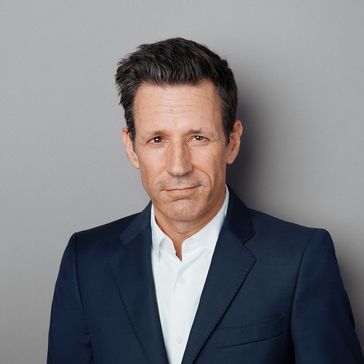
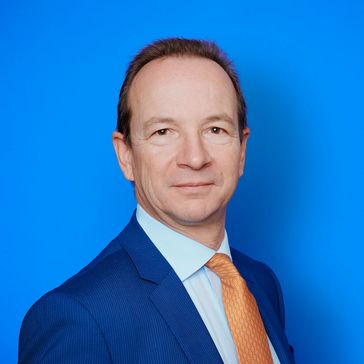
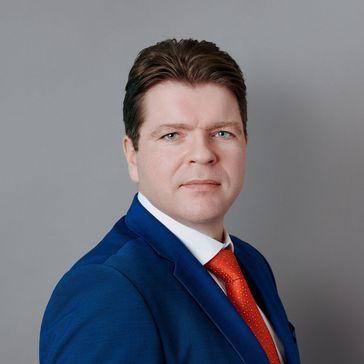
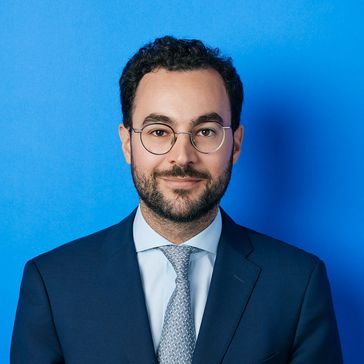
| CONTACTS |
Harold Frey |
Associé, Responsable du groupe Judiciaire et Arbitrage, Zurich harold.frey@lenzstaehelin.com Tél: +41 58 450 80 00 |
|
Xavier Favre-Bulle |
Associé, Responsable du groupe Arbitrage, Genève xavier.favre-bulle@lenzstaehelin.com Tél: +41 58 450 70 00 |
|
|
Fedor Poskriakov |
Managing Partner adjoint, Responsable Fintech, Genève fedor.poskriakov@lenzstaehelin.com Tél: +41 58 450 70 00 |
|
|
Hikmat Maleh |
Associé, Co-responsable du groupe Investigations, Genève hikmat.maleh@lenzstaehelin.com Tél: +41 58 450 70 00 |