Switzerland introduces individual taxation for married persons
Published: 8 March 2026
Partner, Head of Tax
Deputy Managing Partner, Head of Private Clients
Associate
| Published: 8 March 2026 | ||
| AUTHORS |
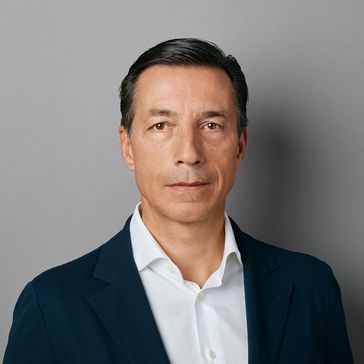
Lukas Aebi |
Partner, Head of Tax |
|
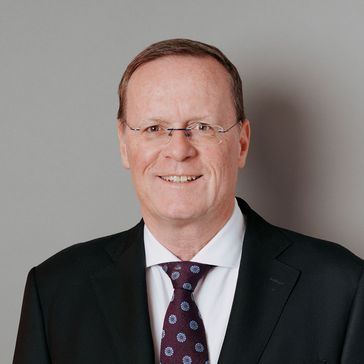
Heini Rüdisühli |
Deputy Managing Partner, Head of Private Clients |
|
|
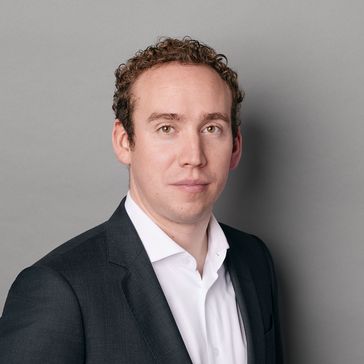
Louis Probst |
Associate |
|
| Expertise |
Tax |
Introduction
For many years, there have been efforts to eliminate the unequal tax treatment of married and unmarried couples, commonly referred to as the “marriage penalty”. The inequality lies in the fact that, under current law, the income and assets of a married couple are aggregated for income and wealth tax purposes, respectively, whereas this is not the case for unmarried couples. Since the applicable progressive tax rates do not in every case fully compensate for the effect of this addition of tax factors, married couples are in certain cases taxed more heavily than unmarried couples in comparable circumstances.
Today, the Swiss voters approved the Federal Act on Individual Taxation (FAIT). Going forward, the income and wealth of married couples will no longer be aggregated for income and wealth tax purposes. Rather, married persons will be taxed in the same manner as unmarried persons.
This change will apply to all levels of taxation (i.e., the federal, cantonal and municipal). The reform is expected to enter into force not before January 1, 2030.
Content of the reform
Under the FAIT, individuals will be taxed individually on their income and wealth, irrespective of their civil status. This decoupling is expected to lower the tax burden for many dual-income households. By contrast, for married couples following a more traditional family model, with one working spouse and one stay-at-home spouse, the income tax burden will generally increase, in particular in situations where the single income is high.
The FAIT is a federal law. Although the principle of individual taxation is also being introduced on a binding basis for the cantons and municipalities, the cantons and municipalities remain sovereign in setting tax rates. The FAIT itself therefore only introduces new tax rates for federal income tax. The cantons now face the task of re-designing their tariff and deduction regime as well.
Specifically, the reform will affect the most important elements of the tax base as follows:
- Employment income will be attributed to the spouse who earns it;
- Pension income will be attributed to the spouse who is entitled to it;
- Income-generating expenses will be allocated to the spouse to whom the relevant income is attributed, regardless of which spouse actually bears the costs;
- Assets will generally be assigned according to civil law (in the case of real estate, the land registry entry will be decisive) and, in the case of joint ownership, split 50/50 between the spouses. Debt and mortgage interest are attributed to the debtor under the relevant loan agreement.
- Child-related deductions will be divided equally between the parents.
General practical implications
The reform is a fundamental shift from the household as the relevant economic unit of income and wealth taxation to the individual, which has ramifications well beyond tax base and tariff structure and also affects:
- procedural tax law;
- spousal liability;
- retirement planning and the interaction of the tax system with the social security and retirement system.
The next few years until the reform comes into force will be dominated by questions of concrete implementation at all levels. This applies in particular to the cantonal level, where the cantonal legislators will need to determine their respective approaches to tariff design, tax assessment and collection.
Implications for persons taxed on a lump-sum basis
Persons subject to lump-sum taxation may also be affected by the reform. Under current law, the tax base for assessing lump-sum taxation is the combined living expenses of both spouses, subject to the applicable minimum thresholds and the control calculation. In addition, both spouses must comply with the legal conditions in order for the regime to apply to the couple.
With the adoption of the reform, spouses subject to lump-sum taxation will be assessed individually. This opens up the possibility for couples where only one person meets the requirements for lump-sum taxation – whether because the other person holds Swiss citizenship or pursues gainful activity in Switzerland – to marry without forfeiting the qualifying person’s entitlement to lump-sum taxation. In such a scenario, one spouse could be taxed on a lump-sum basis, the other ordinarily.
At the same time, the reform may lead to an increase in the tax base for married couples currently taxed on a lump-sum basis, as each individual must meet the minimum threshold (currently at least CHF 435,000 taxable income at the federal level per person rather than per couple). This could raise the overall tax burden, particularly for married couples near the minimum thresholds. In some cases, ordinary taxation for one or both of the spouses may become more advantageous.
Whether lump-sum taxation remains beneficial will depend on the individual circumstances of the persons concerned and the cantonal implementation of the reform. Early assessment is recommended.
For further analysis or assistance regarding the transition to individual taxation, please do not hesitate to reach out to our Tax and Private Client Practice Group.
Legal Note: The information contained in this Smart Insight newsletter is of general nature and does not constitute legal advice.
Let’s talk



| CONTACTS |
Jean-Blaise Eckert |
Partner, Head of Tax, Geneva jean-blaise.eckert@lenzstaehelin.com Tel: +41 58 450 70 00 |
|
Daniel Schafer |
Partner, Deputy Head of Private Clients, Geneva daniel.schafer@lenzstaehelin.com Tel: +41 58 450 70 00 |
|
|
Heini Rüdisühli |
Deputy Managing Partner, Head of Private Clients, Zurich heini.ruedisuehli@lenzstaehelin.com Tel: +41 58 450 80 00 |
|
|
Lukas Aebi |
Partner, Head of Tax, Zurich lukas.aebi@lenzstaehelin.com Tel: +41 58 450 80 00 |
|
|
Lucien Masmejan |
Partner, Head of Private Clients, Lausanne lucien.masmejan@lenzstaehelin.com Tel: +41 58 450 70 00 |
|
|
Nathalie Vetsch-Cevallos |
Partner, Lausanne nathalie.vetsch-cevallos@lenzstaehelin.com Tel: +41 58 450 70 00 |